Draught-proofing doors and letterboxes
An outside door has more ways to let air in than almost anything else in the house: the gaps round the frame, the gap underneath, the letterbox, the keyhole and sometimes a cat flap. Doors also move with the seasons and wear with use, so gaps that weren’t there when the door was hung open up over time.
Nearly all of it is DIY, the materials are cheap, and you’ll feel the difference the same evening.
What it saves
The Energy Saving Trust estimates that draught-proofing windows, doors and floors together saves a typical home in Great Britain about £55 a year, or £80 in Northern Ireland. It puts the cost of having a professional draught-proof the windows and doors of a whole house at around £250; doing it yourself costs less.
The bigger gain is often comfort. A hallway without cold air streaming under the front door is a far nicer place to be, and a home that feels warmer makes it easier to turn the thermostat down.
Before you start
Outside doors only. Draught-proof the doors that lead outside, or into an unheated porch, garage or conservatory. Leave internal doors alone: the gaps round them let air move between rooms, which keeps condensation down and lets fires and boilers draw the air they need.
Fire doors are different. The front door of a flat, the door between a house and an integral garage, and doors in a loft conversion are often fire doors. Don’t fit anything that stops a fire door closing fully on its own, and never paint over, cover or remove the intumescent strips round its edge (the strips that swell in a fire to seal the gap). If you live in a flat, check with the landlord or building manager before changing the front door.
Keep vents open. Sealing doors makes a home more airtight, so make sure the vents that are meant to be there still work: trickle vents in windows, air bricks, extractor fans and any vent serving a gas fire, boiler or stove. If a room has an open-flued appliance and no vent, ask a Gas Safe registered engineer before sealing its doors.
Don’t make the door hard to open. A door that needs a shove to close after draught-proofing has a seal that is too thick. In an emergency, every outside door needs to open easily.
Finding the gaps
Pick a cold, windy day, close the door and try these:
- Run the back of your hand slowly round the edges of the door. Cold air is easy to feel.
- Hold a strip of tissue near the frame, the bottom edge, the letterbox and the keyhole. Wherever it flutters, there’s a gap.
- Look for daylight from inside the hall, or at night ask someone to shine a torch from outside.
- Shut the door on a sheet of paper. If you can pull it out easily, that part of the door isn’t sealing. Try it at several points down each side and along the top.
Most doors leak in more than one place. Note where, and how wide each gap is, as that decides which seal to use.
Sealing round the frame
The seal goes on the stop, the strip of the frame the door closes against, so it is squashed slightly when the door shuts. Clean and dry the surface first; most self-adhesive seals fail because they were stuck to dust or old paint.
| Type | Suits | Worth knowing |
|---|---|---|
| Self-adhesive foam strip | Small, even gaps; a quick fix | The cheapest option, but it flattens and needs replacing every year or two. |
| Rubber or EPDM profile strip (“P” or “E” shaped) | Gaps of a few millimetres that vary along the door | Lasts much longer than foam. The P shape fills larger gaps, the E shape smaller ones. |
| Wool or felt strip | Small to medium gaps; anyone avoiding plastics | Natural and hard-wearing. Squashes to fit uneven gaps. |
| Brush strip | Uneven gaps, and doors that rub or drag | Copes well with movement; less airtight than rubber on a well-fitting door. |
| Sprung metal or plastic strip (V-strip) | Older doors where you don’t want anything visible | Sits in the gap and springs out to seal. Takes more care to fit. |
| Routed-in seal | Older timber doors, fitted professionally | A groove is cut into the door edge and a seal set into it. Neat and long-lasting; a job for a joiner or specialist. |
Gaps round the outside of the frame. Where the frame meets the wall, gaps are filled rather than draught-stripped. Use decorator’s caulk inside and an exterior-grade sealant outside. Larger gaps can take expanding foam first, trimmed and then sealed over.
The bottom of the door
The gap under an outside door is often the biggest single leak, and the one you feel most, because cold air sinks and runs along the floor.
- Brush or rubber strip on the door. Screwed or stuck along the bottom of the door on the inside face. Brushes cope with uneven floors and doormats; rubber seals tighter on a level threshold.
- Weather bar. A shaped strip fixed to the outside bottom edge of the door that throws rainwater off. Worth fitting with a seal if rain gets in as well as wind.
- Threshold seal. A strip fixed to the floor under the door that the door closes onto. Good for large gaps, but it raises the threshold slightly, so think about trip hazards and wheelchair access.
- Drop-down seal. Fitted into or onto the bottom of the door, it drops to the floor when the door closes and lifts when it opens. Neat and effective; best fitted by a joiner.
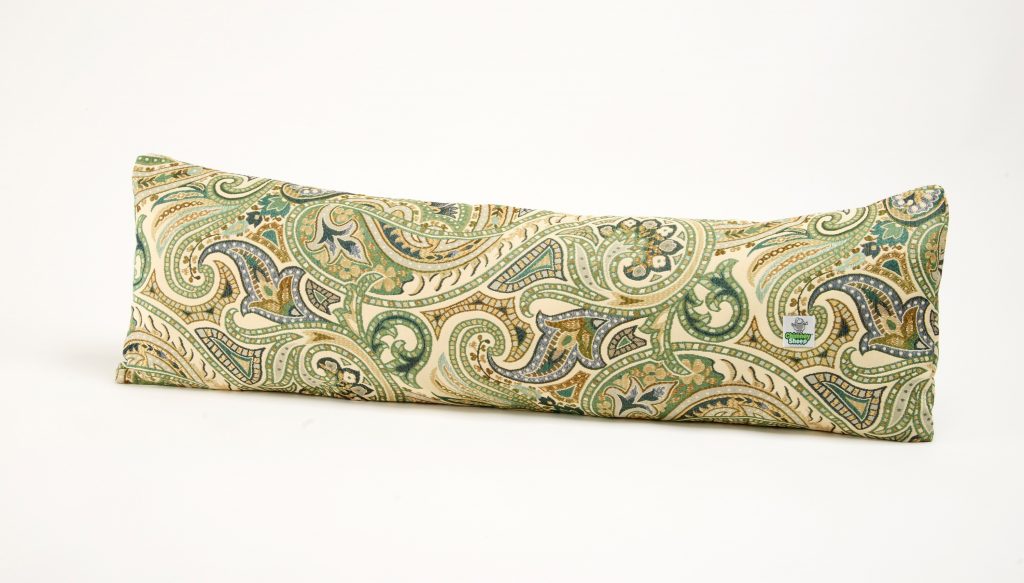
- Fabric draught excluder. The long cushion that sits against the bottom of the door. Choose a heavy one so it stays put. No fitting, and it can move with you if you rent.
A thick curtain on a rail across the inside of the door, sometimes called a portière, helps too, particularly with older doors that can’t be sealed well. Use a rising rail or hang it so it clears the door as it opens.
Letterboxes, keyholes and cat flaps
Letterbox. Fit a brush draught excluder to the inside of the door, over the letterbox opening. It has two rows of bristles that let post through but stop most of the air. Some come with an inner flap as well, which seals better still. Measure the opening before you buy, and check the fixing screws won’t come through the outside of the door. On a fire door, use only fire-rated letterbox fittings.
Keyhole. An old-style keyhole that a lock key goes through can whistle on a windy day. A keyhole cover, a small pivoting metal plate called an escutcheon, sits over it on the inside and swings aside when you need the key. They screw on in a few minutes.
Cat flap. Older or cheap flaps often hang slightly open or rattle. A flap with a magnetic or brush seal closes properly after each use. If yours doesn’t, replacing it is usually straightforward, as many flaps are made to fit common hole sizes.
Glazing. If a door has glass panels, check round the beading that holds the glass in place. Small gaps there can be sealed with a clear or paintable sealant.

Older and listed homes
Old timber doors are worth keeping. Historic England’s advice is that traditional doors and windows can almost always be repaired, and that draught-proofing is one of the most cost-effective and least intrusive improvements you can make to them. Repair first: rehang a dropped door, ease a sticking one, and fill splits, then seal what gaps remain.
Surface-fixed seals, brushes and curtains don’t alter a door and can be removed, so they suit older homes well. Routed-in seals involve cutting into the door, and fitting a new letterbox or replacing a door changes it for good. On a listed building, works that affect its character can need listed building consent, so check with your council’s conservation officer before anything is cut or replaced.
If you rent
Fabric draught excluders, door curtains and letterbox brushes that screw into existing holes can usually be used without asking, and come with you when you leave. Self-adhesive strips are generally fine too, though they can lift paint when removed. For anything that means drilling, cutting or changing the door, ask your landlord first. If the front door is badly draughty, it is a fair repair to request.
Where to buy
Door seals, letterbox brushes and keyhole covers are sold by DIY stores, ironmongers and builders’ merchants, and online. Examples, in alphabetical order:
- Chimney Sheep (wool door and window strips, fabric door draught excluders): chimneysheep.co.uk
- Exitex (letterbox brushes, brush and weather strips): sold by IronmongeryDirect and others
- Stormguard (foam, rubber and brush seals, threshold strips): sold by most DIY stores
Chimney Sheep is the company that runs this site.
Sources
- Energy Saving Trust: draught-proofing
- Historic England: draught-proofing windows and doors
- Safelincs: intumescent strips and smoke seals for fire doors
Last checked 23 October 2026.