Draught-proofing chimneys and fireplaces

An open chimney you don’t use is like a window left open all winter. Warm air rises up it day and night, and as it goes it pulls cold air in through the gaps round your doors and windows to replace it. Blocking it is one of the cheapest draught-proofing jobs there is, and usually one of the quickest.
What it saves
The Energy Saving Trust estimates that blocking an unused chimney saves about £45 a year in Great Britain and £60 in Northern Ireland. That comes on top of the saving from draught-proofing doors and windows.
Research by the University of Liverpool’s School of Architecture, commissioned by Chimney Sheep in 2013, modelled a range of house types and found that blocking a chimney cut heating demand by about 5% on average. At October 2026 gas prices, that is around £120 a year for each chimney blocked.
The two figures differ because they are worked out differently. The Energy Saving Trust bases its estimate on one typical home; the Liverpool study modelled houses with different levels of insulation. Either way, the figure is for one chimney, so a house with several unused fireplaces can expect to save more.
The room will also feel less draughty, and that is often the first thing people notice.
Before you start
Three rules matter more than anything else on this page.
- Never block a chimney or flue that serves a gas fire, boiler, stove or any other working appliance. The flue has to stay clear to carry fumes, including carbon monoxide, out of the house.
- Always take a chimney draught excluder out before you light a fire. Leave yourself a reminder you can’t miss, such as a tag on the grate or a note on the mantelpiece. Many products come with one.
- Don’t seal a chimney completely airtight. A little air moving through the flue keeps it dry. A chimney sealed at both ends with no ventilation can become damp, which shows as stains on the chimney breast.
It’s also worth having the chimney swept before you fit anything, so loose soot and debris don’t fall onto it. Birds often nest in chimneys in spring and early summer, and an active nest is protected by law, so autumn is the best time to fit a blocker.
Types of chimney draught excluder
There are six main types. The first three you can fit yourself and take out again; the last three are more permanent and usually need a tradesperson.
| Type | How it works | Best for | Worth knowing |
|---|---|---|---|
| Inflatable blocker | A tough plastic bag inflated inside the chimney, just above the fireplace opening | Open fireplaces you rarely use, and chimneys with irregular shapes, as it moulds to fit | Avoid PVC ones: if a fire is lit by mistake, PVC can give off harmful fumes. Check the pressure each autumn, as some lose air over time. |
| Wool or felt plug | A thick block of felted sheep’s wool pushed up into the chimney, often on a handle or pole | Fireplaces you use now and then, since it is quick to take out; anyone avoiding plastic | Measure carefully, as one that is too small won’t stay put. Wool lets a little air through, which helps keep the flue dry. |
| Fireplace board or cover | A panel across the front of the fireplace, held by magnets, a frame or a snug fit | Fireplaces with several vents or vents at floor level; decorative grates you would rather not disturb | Stays on show, and may not seal well against an uneven surround. |
| Chimney damper | A flap in the chimney throat or at the top of the chimney that you open and close | Chimneys you use regularly | Needs professional fitting. Some top-mounted dampers are worked by a cable from the fireplace. |
| Register plate with vent | A metal or board plate fixed across the chimney throat, with a small vent grille | Fireplaces you have stopped using for good | Permanent. Usually fitted by a builder or stove installer. |
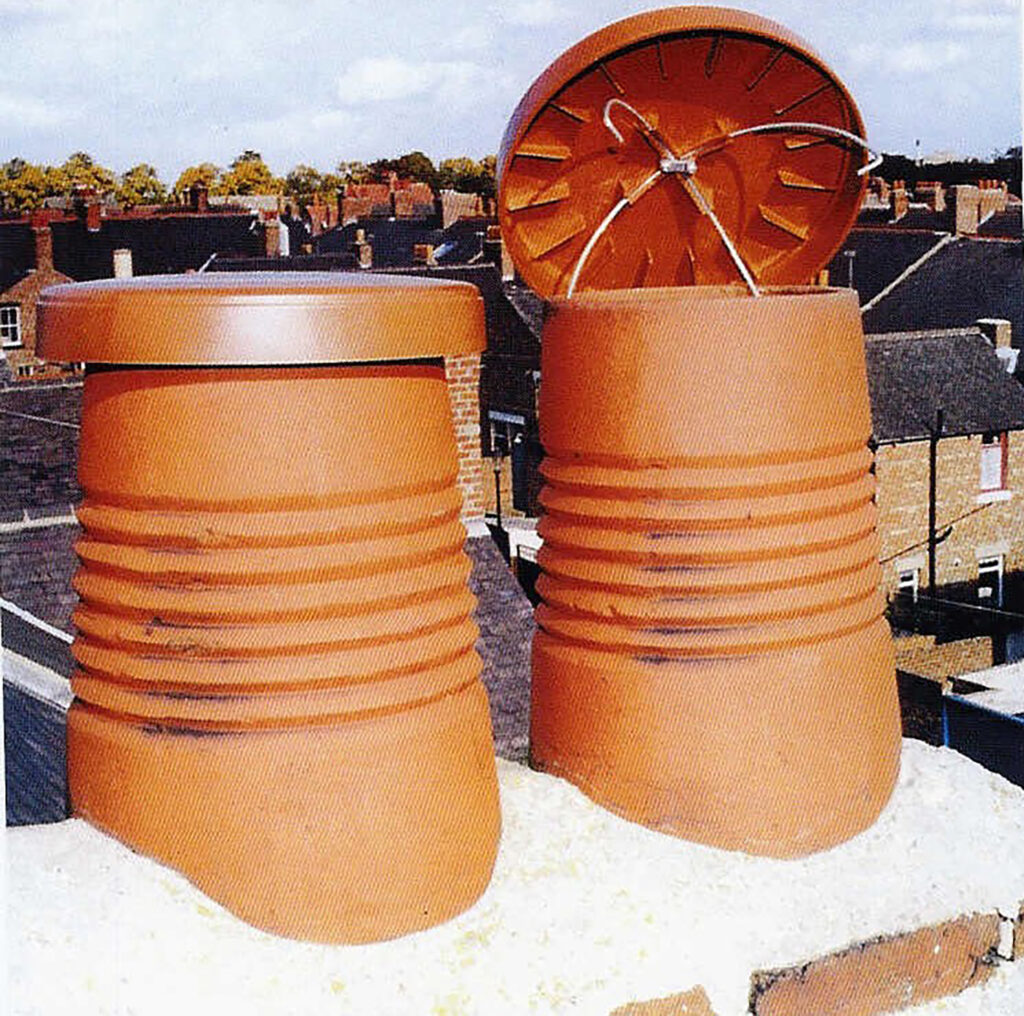
| Chimney cap or cowl | A cover on the chimney pot that keeps rain out but lets a little air through | Chimneys out of use for good, together with a vent lower down | Means working at height, so usually a roofer’s job. The Energy Saving Trust puts the cost from about £150. |
Which one suits you
It mostly depends on how often you light the fire.
- Most weeks in winter: a damper, or a wool plug you are happy to take out each time.
- A few times a year: an inflatable blocker or a wool plug.
- Never, but you might want to one day: any removable blocker. It can stay in for years and comes out when you need it.
- Never, and you’re sure: a register plate with a vent at the bottom and a cap or cowl at the top, so the chimney stays dry.
- There’s a gas fire or stove in the fireplace: don’t block it. Ask a Gas Safe registered engineer, or a HETAS-registered installer for a wood or multi-fuel stove, about the options.
Measuring and fitting a removable blocker
- Shine a torch up the chimney from the fireplace and find the throat, the narrowest point just above the opening.
- Measure its width and depth. Blockers come in set sizes, so measure rather than guess.
- Push the blocker up until it sits level and stays in place on its own.
- Hold a strip of tissue near the edges. If it flutters, there is still a gap to close.
- Put your reminder where you’ll see it before you reach for the matches.
Older and listed homes
Blockers that sit inside the fireplace don’t alter the building and can be taken out at any time, so they suit older homes well. They also leave original grates and surrounds untouched.
Permanent work is different. If your home is listed, fitting a cap or cowl, removing chimney pots or fixing a register plate may need listed building consent. In a conservation area, changes to how a chimney looks from outside can need planning permission, particularly where the council has removed some permitted development rights. Speak to your council’s conservation officer before you book the work.
If you rent
A removable blocker is usually fine to use without asking, as it changes nothing and leaves with you. Anything fixed, such as a cap, damper or register plate, is for your landlord to decide. If the chimney is very draughty, it is worth raising. Landlords in England are already planning energy improvements, as privately rented homes must reach EPC band C by 2030.
Where to buy
Chimney draught excluders are sold online and by DIY stores and builders’ merchants. Examples, in alphabetical order:
- Chimney Balloon (inflatable): chimneyballoon.co.uk
- Chimney Sheep (felted wool): chimneysheep.co.uk
- Stormguard (inflatable): sold by Screwfix and others
- Wooltherm (sheep’s wool): sold by Ecological Building Systems
Chimney Balloon and Chimney Sheep are made by the company that runs this site.
Sources
- Energy Saving Trust: draught-proofing
- University of Liverpool study of chimney draught excluders (2013), commissioned by Chimney Sheep
- Ofgem: energy price cap, 1 October to 31 December 2026
- Stoves Online: capping unused chimneys
Last checked 23 October 2026.